Saturday, 25 January 2014

Chart Concept 2

For my next designer I wanted to choose Ray and Charles Eames but first we need to look at some information about Alvar Aalto. He is the one who had started experimenting with the bending of wood and was a font of inspiration for artists like Marcel Breuer and the said Ray and Charles Eames.

Alvar Aalto got married in the 1920s, and, together with his wife, started experimenting in the bending of wood. These researches lead to Aalto’s revolutionary designs in which he started bonding veneers together.  This led to the creation of the Model No: 41 Chair. In 1931/32 he designed the Model No: 31 Chair.

These works were of inspiration to Ray and Charles Eames thus they started their own research and made new discoveries. These discoveries got them a commission from the US Navy to develop plywood splints, stretchers and glider shells which were moulded by heat and high pressure. Their revolutionary proposals were state-of-the-art in manufacturing technique; firstly the moulding of plywood into complex curves and also the use of cycle welding which enables metal and wood to be joined. At this time there were a lot of advancements in technology which made these techniques possible. Such example could be seen in:

Plywood splints commissioned by US Navy

CTW table and LCW plywood chair

Eames had more than a decade filled with masterpieces even though it was a time of war and financial crisis. This is reflected in their works, since it was during and after World War II their designs had to be simple, highly functional, without excessive material and can be mass produced. The industry follows trends and events but war generates its own industry weather in the form of weapons or support such as in the case of the leg splints.

In turn Ray and Charles Eames were a source of inspiration for other artists such as Karim Rashid and Frank Gehry. In their works one can see the influences they still have on today’s designers.

Karim Rashid and Frank Gehry respectively.

1931/32 Alvar Aalto Model No 31
1941 Japanese attack pearl harbour
1943 Italy joins Allies
1943 Eames Leg Splints
1944 D-Day
1945 End of World War II and massive reconstructive in Germany and Japan / United Nations Founded / USA drops atomic bomb on Hiroshima and Nagasaki
1945 Plywood Elephant
1946 moulded plywood coffee table
1948 La Chaise
1948-50 plastic shell chairs with various bases 
 1951-53 Wire Mesh Chair

1956 Eames Lounge (670) and Ottoman

HermanMiller.  Products. [online] Available at: http://www.hermanmiller.com/products/seating/multi-use-guest-chairs/eames-molded-plywood-chairs.html [Accessed on 5th January 2014]

About.com. Timeline of the 20th century: 1940s Timeline [online] Available at: http://history1900s.about.com/od/timelines/tp/1940timeline.htm [Accessed on 5th January 2014]

Vitra Design Museum. UN. Organic Armchair Charles Eames and Eero Saarinen [online] Available at: http://www.design-museum.de/en/collection/100-masterpieces/detailseiten/organic-armchair-charles-eames-und-eero-saarinen.html [Accessed on 5th January 2014]

 Herman Miller. Design Story. [online] Available at: http://www.hermanmiller.com/products/seating/multi-use-guest-chairs/eames-molded-plywood-chairs.html [Accessed on 5th January 2014]

Chart Concept 1


Since I am more into simple, functional designs, which actually serve a purpose and have no excessive decoration, I decided to follow this path in choosing my designers. So I started with Marcel Breuer since he is the most influential furniture designer for the Bauhaus movement. Breuer was first recognized for his invention of bicycle-handlebar-inspired tubular steel furniture thanks to the innovative aluminium, tubular-steel and also for making use of plywood. In these designs he made use of cantilevers. Breuer also experimented with the bending of plywood which he was inspired by Alvar Aalto. Since he is also a source of inspiration for Ray & Charles Eames, I will talk about him later.


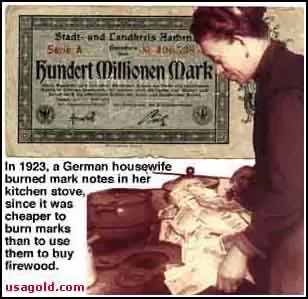
Marcel Breuer worked for Bauhaus in the 1920’s, so one also has to keep in mind what was happening to the rest of the world at the time. At the beginning of the decade we have the prohibition in the U.S. and at the end there was the beginning of the Great Depression and the fall of the Stock Market. In the mean time we have the Extreme Inflation in Germany which was causing prices to rocket sky high due to the expenses caused by the War. It was also the time of new improvements and discoveries and when women were starting to be recognised for their abilities and starting to gain equal rights as men. Such as the fact that women were also granted to vote in the U.S. a woman swims across the English Channel and Lindbergh Flies solo across the Atlantic where he later marries Amelia Earhart and eventually she too flies across the Atlantic.


Therefore it was the time of new inventions and possibilities. But it was also a time of financial instability, first for Germany, so even the designers had to be careful of what type of materials to use and to make it as cheap as possible but still keeping a sense of style. I think this was one of the reasons why designers such as Marcel Breuer and others at Bauhaus worked with simple yet functional designs, because it wasn’t the time of luxury and if someone bought a piece of furniture it sure wasn’t going to be for decoration but for purpose.

While I was going through Frame Magazine for another assignment’s research I found this Hotel in Barcelona called The Renaissance Barcelona Fira Hotel where the chairs and tables of the dining area are very similar to the style Marcel Breuer had made popular. This hotel is the work of architects Jean Nouvel and Ribas José.


1920 prohibition and women right to vote
1921 extreme inflation
1925 Wassily chair
1926 woman swims English channel
1927 Lindbergh Flies Solo Across the Atlantic
1928 first mickey mouse cartoons
1928 chair with armrests and cantilever
1929 great depression
1935 emigrated to london

Design Museum. November 2005. MARCEL BREUER - Architect + Furniture Designer (1902-1981)[online] Available at: http://designmuseum.org/design/marcel-breuer  [Accessed on 30th December 2013]

Jennifer Rosenberg. 2013. 1920s Timeline - Timeline of the 20th Century. [online] Available at: http://history1900s.about.com/od/timelines/tp/1920timeline.htm  [Accessed on 30th December 2013]

Nicole Copello. 2011. Extreme Inflation in Germany [online] Available at: http://from-nineteen-eighteen.blogspot.com/2011/08/extreme-inflation-in-germany_5656.html  [Accessed on 30th December 2013]

The Herb Museum. Prepare for Prohibition - Pither & Leiser (1917). [online] Available at: http://www.herbmuseum.ca/content/prepare-prohibition-pither-leiser-1917  [Accessed on 30th December 2013]

[online] Available at: http://www.design-technology.org/MarcelBreuer.htm [Accessed on 30th December 2013]


Concept Formation: Contrasting Designers


Apart from gathering relevant visual and textual data, in this task we are also asked to come up with producing a visual chart. In which we have to discuss five designers from five different movements from the periods we discussed in class. We are to explain the relationship of the movements as visually as possible with text being kept to a minimum. Also we need to show understanding of the cultural and social context within which the artists and designers were working in.


For this I am planning to show a connection between Marcel Breuer (Bauhaus), Ray and Charles Eames (Organic Design) and Verner Panton (Pop Art Design) in contrast with Ettore Sottsass (Memphis Group) and Richard Meier (Alessi). I want to visually communicate the issue that the first three designers have good, simple designs with high functionality and lack of excessive detail. In contrast, the other two designers have angular, geometrical forms which are not actually functional and are also bulky. In the chart this has to be shown and understood visually without the use of words thus the use of this blog would be to actually give details as to how I went about the whole process, my thoughts, my findings and conclusions I reached.

I will be discussing the inspiration and advancements of these designers from one another as well as producing background information and who lead them on that path as to why they did what they did. I will also be discussing how they influenced present designers as well as to where one can find classic designs such as the Panton Chair by Verner Panton locally.

Let’s get started!!

Design for Specific Usage

Design for Safety
Awareness which started in the 60’s with the publication of the book “unsafe at any speed: the Designed – In Dangers of the American Automobile” by Ralph Nadar 1965.

The development of products makes them safer to use. Such as: fire extinguishers, seat belts, air bags, smoke alarms, etc. There is a specific area in design which caters for such equipment and some of which can also be made appealing to their surroundings such as the Chick-a-Dee smoke detector by designer Louise van der Veld.

Without a doubt theses safety equipments have to be manufactured according to guidelines and standards set by a specialized committee. These standards are included in legislations which govern product design and manufacturing. With these standards in mind, a particular French company, Fire Design, produces fire extinguishers with customised designs. This way they can be placed in a home without it being too much out of place as well as offices having a particular logo on it making it part of the establishment.


As for the toy industry products which comply with the European Directives bear the mark C E. This enables the products to be exported and imported in the member countries.


Design for Sport
This involves pushing materials and technology to their limits. Sports equipment relies on countless research and developments. Such designs are usually made with the latest computer technologies and are in accordance with ergonomic data. These designs are created to improve performance and make use of lightweight materials so they won’t be a hindering effect themselves.

Design for Third World
With regards to this kind of design, the aim is to empower developed nations to meet their own needs making economic and environmental sense.


Wobo World Bottle 1960’s done with Heineken glass bottles.

These particular designs are done because for European countries are not much but for such poor countries makes a whole lot of difference and life a little bit easier. Another example is the design “H is for Hippo” which helps carrying water from one place to another easily and at the same time it is flattening the ground which makes it easier for the next trip.


Another great and cheap design is the Mine Kafon which is a detonator for landmines and saves thousands of lives. It is simply made out of bamboo, iron and plastic and resembles a giant clump of dandelions getting blown around by the wind. It is tracked via GPS and can clear up to four bombs before it gets completely destroyed. 


Elka Karl. February 2012. Chick-a-Dee: A Smoke Detector For Design Fans. [online] Available at: http://www.casasugar.com/Chick--Dee-Offers-Cool-Smoke-Alarm-21601939 [Accessed on 22nd January 2014]

Barbara. June 2009. Cool Fire Extinguishers For Your Home [online] Available at: http://skcnis.com/2009/06/cool-fire-extinguishers-for-your-home/ [Accessed on 22nd January 2014]

Simon Tomlison. October 2012. Mail online - Can this giant ball which gets blown around in the wind rid the world of landmines? [online] Available at: http://www.dailymail.co.uk/sciencetech/article-2221272/Blown-away-Giant-ball-rolls-wind-detonating-landmines-path.html [Accessed on 22nd January 2014] 

Sustainable Design


This term describes a design philosophy that values the natural environment as an integral factor in creating new products or modifying old ones. This is to try to maximise overall efficiency with surrounding resources, such as transport, as well as energy efficiency, habitat preservation and restoration, natural and renewable energy sources, water conservation, recycled, local and non-toxic materials, and healthy and productive interiors. It is also the learning about green buildings and cradle-to-cradle design. Designers have to keep in mind from the initial stage and before designing the product how this can be re-used after its usage.


Planned Obsolescence
This is based on the concept of intentionally limiting the life of products so that consumers are manipulated into consuming more. This creates conflicting views which keeps workers and designers in employment and also helps the economy. But on the other hand, waste is created by the premature replacement of the commodities. Such examples are: Disposable shaving blades, computers, tv’s and mobiles, small perfume bottles, make up refills, ect.


Planned obsolescence can arise either from the change in appearance and style or a change in technology.


Cradle-to-cradle Design
This term was developed by William McDonough in 2002. Under this philosophy, products are evaluated for sustainability and efficiency in manufacturing processes, material properties and toxicity as well as potential to reuse materials through recycling or composting.

This example could be seen in Products in the PUMA InCycle collection which is Cradle to Cradle Certified. This way it could be disposed in way that it decomposes without the need of adding chemicals and harming the environment.


Amanda Crisp. 2013. Go Green With Sustainable Design Practices [online] Available at: http://www.vtldesign.com/vital-design-news-jobs-and-culture/vital/green-sustainable-design-practices/ [Accessed on 22nd January 2014]

MBDC. March 2013. Products in the PUMA InCycle collection are Cradle to Cradle Certified[online] Available at: http://www.mbdc.com/2013/03/12/products-in-the-puma-incycle-collection-are-cradle-to-cradle-certified/ [Accessed on 22nd January 2014]

Friday, 24 January 2014

User Centred Design

‘The central premise of user centered design is that the best designed products and services result from understanding the needs of the people who will use them.’  -  Design Council

Design for disability
Michael Boulay’s easy-to-grip fork, designed for hemiplegics (a person who is paralyzed on one side of the body).


It can be used as a learning aid (Braille bracelet)


It is also used for Medical design


Inclusive design means that it is a better design and is not a stage that can be added.

Environmental Design
When designing a product, designers are concerned with minimizing waste, to reduce consumption of energy and materials and to maintain a sustainable level.

Pioneered by Richard Buckminster Fuller in 1920’s design science based on the concept of ‘providing the most with the least’.

The Montreal Biosphère by Buckminster Fuller, 1967.


Another example is the Dymaxion car designed by Buckminster Fuller in the early 1930’s.

By the 80’s environmentalists warned of the effects of industrialization on global warming.

Environmental / Green Design
Environmental design takes into consideration the product’s whole life cycle such as the extraction of raw materials and their carbon footprint, the ecological impact of their processing, the energy consumed in the manufacturing process, any negative by-product, the energy required for and the impact of the distribution system, the length of the product’s service life., component recovery, the product’s efficiency, it’s recyclability and the ultimate effects of disposal on the environment such as landfill and incineration. 

Recycling
Tejo Remy’s rag chair

Other examples of green design are:

Organic baby clothes

 
Organic and wooden toys

Stainless steel water bottles

 
Bamboo kitchenware and furniture

Recycling can reduce waste but not necessarily minimize it. Increased product durability on the other hand minimizes waste and energy consumption. Doubling the product life can minimize the environmental impact by half.